Updated Damp, Mould and Condensation Guidance
The Association has recently drafted a brand new policy document on its approach to cases of damp, mould and condensation in homes. Check out our latest Resident Health and Safety news item on the topic here.
News
You may have seen in recent years that the topic of Damp, Mould and Condensation in homes has become much more topical in the housing sector. With the importance of this issue in mind, plus the forthcoming introduction of 'Awaab's Law', the Association has created a brand new standalone procedure to articulate how it will approach any cases within our residents' homes.
You can read the policy document in full here.
We would like to take this opportunity to also give some more guidance and FAQ answers for those who'd like to know more.
As always, if you have any concerns relating to damp, mould or condensation in your home, please contact us on 0141 285 7910 or email administration@yorkhillha.org and our staff will work constructively with you to investigate and resolve the issue.
Damp and Mould FAQs
While damp and mould issues can in some cases be serious health hazards, the good news is that with the right combination of timely reporting of issues, the repairs and maintenance carried out on homes and buildings, the input of our Property Services staff and good practice within the home to minimise risks, many cases can be effectively managed and treated.
You will never be blamed for reporting damp or mould. Our role is to investigate causes and work with you on solutions.
Use the collapsible FAQ guide below to know more.
Damp: Excess moisture entering or remaining in the home.
This may be either rising damp coming from the ground, or penetrating damp coming through either external walls or from internal leaks in the building.
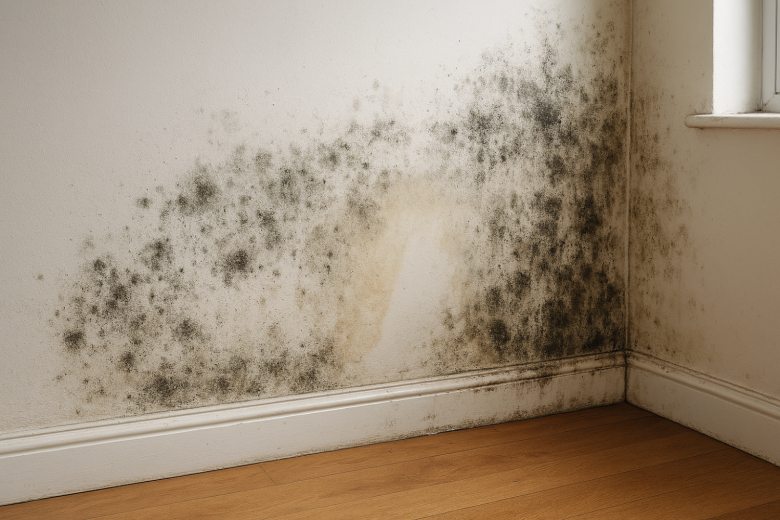
Mould: Fungal growth thriving in damp conditions, frequently associated with condensation and poor ventilation. It is often visible as black, green or white patches; often appears first on colder walls, behind furniture, at window reveals, and in bathrooms/kitchens. Mould growth is usually a sign of an underlying damp or condensation problem.
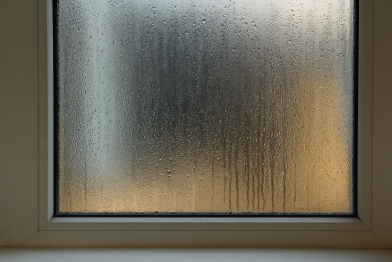
Condensation: Moisture in warm air condensing on cold surfaces; often linked to ventilation, heating and occupancy patterns. It occurs when warm, moist air meets a cold surface, causing water droplets to form. Over time, repeated condensation can lead to damp patches and mould growth if not managed.
Why Are They A Problem?: Damp and mould can affect indoor air quality and impact physical health - particularly the airways, lungs, eyes and skin. People with certain health conditions, as well as children and older adults, are more vulnerable to severe effects. Mould releases tiny spores into the air that can cause health issues such as coughing, breathing problems, allergies, and can worsen conditions like asthma. There may also be mental health impacts caused by living in poor conditions.
Common causes can include poor ventilation, water ingress or leaks, inadequate heating or insulation and high levels of indoor moisture.
The Association will never blame a resident who reports an issue, and fully recognises that some indoor activities such as cooking, bathing and washing clothes can raise moisture levels - we do not discourage our residents from carrying out these everyday activities.
Common telling signs of a damp or mould issue in a home can include:
- Persistent musty smells
- Black, green or brown mould patches
- Cold or wet patches on walls
- Excessive window condensation
Please contact the Association as soon as you can on any of the following:
- Telephone: 0141 285 7910
- Email: administration@yorkhillha.org
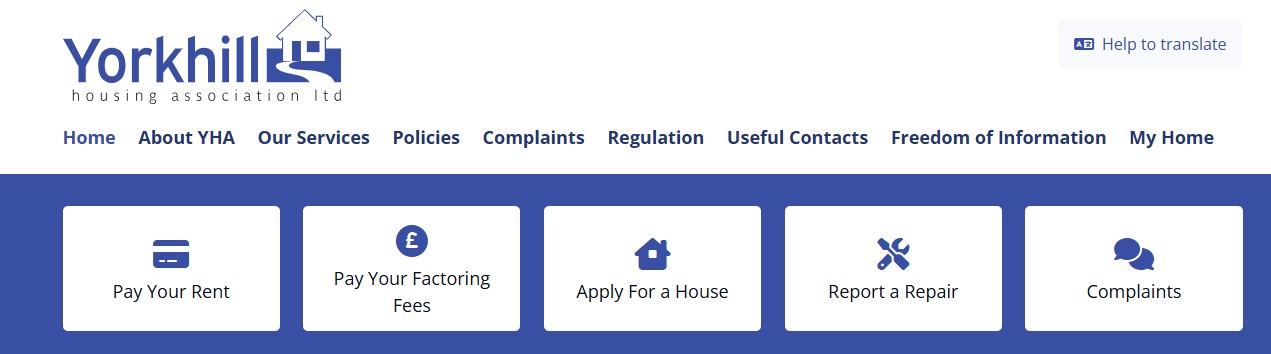
- Online: If you are a YHA tenant, you can log into our Tenant Portal online at https://yorkhillha.org and use the 'Report a Repair' function - shown in the image below
-
Please mention if anyone in the home is pregnant, under 5, over 75, or has asthma/respiratory or other health conditions. This helps us prioritise your case.
We will log your report and triage the risk. In most cases, we will arrange a home visit to properly diagnose the cause.
We use two hazard levels and an 'Out of Scope' category:
- Emergency Hazard - risk of imminent and significant harm (e.g., widespread black mould in a child’s bedroom, or severe damp affecting sleep/breathing): We’ll investigate within 24 hours and carry out any urgent safety actions within the same 24 hours.
- Significant Hazard - significant risk of harm but not imminent (e.g., progressive mould likely due to a ventilation fault): We'll investigate within 10 working days.
- Out of Scope - Small, isolated mould spots caused by condensation (e.g., on window frames, seals or bathroom tiles). These instances usually do not pose an immediate health risk if treated promptly. This does not mean your concern is ignored – we will still provide advice, support and check whether further action is needed: We'll investigate within 10 working days.
After the investigation, we'll send you a written summary within 3 working days explaining what we found, what we will do (and when), and anything we'd like to ask you to do (and why).
If we identify a significant hazard, we will make your home safe and start/take steps to start works within 5 working days of finishing the investigation.
If a complex job needs planning permissions, parts or specialist trades, we’ll still physically start within 12 weeks, and keep you updated with dates.
For emergency hazards, urgent safety actions happen within 24 hours.
Not usually. If your home cannot be made safe within the timeframes, or works would make the property temporarily unsafe, the Association will arrange suitable alternative accommodation at our expense until it’s safe to return. Moving out is always a last resort and would only happen if it’s not safe for you to stay during the works.
No. If the problem is due to the building, our systems, or failures of ventilation/heating fabric, the Association cover the costs for investigation and remedial works.
If condensation is present without a building defect, the Association will check whether reasonable improvements (e.g., fans, trickle vents, minor thermal/ventilation upgrades) would reduce risk, and provide practical advice and supportive measures.
As mentioned, everyday activities such as cooking and washing are a normal part of residents' days and are not discouraged, however good practice to keep moisture levels from becoming excessive includes:
- Using extractor fans in kitchens and bathrooms
- Keeping lids on pans when cooking
- Opening windows or running extractor fans (if you have one) briefly after showers or baths
- Avoiding drying clothes indoors where possible
- Ensuring rooms are adequately heated - warmer air is better at holding moisture and less likely to result in droplets that can fuel mould growth
You can reduce the risk by:
- Keeping air flowing through the home (e.g., trickle vents open)
- Ensuring furniture isn’t pushed tightly against cold external walls
- Wiping away early signs of condensation
- Reporting leaks or ventilation issues promptly to the Association
- Reporting damp and mould cases promptly so that we can try to halt and treat further growth