
Monthly H&S Guidance: E-Devices
The Association recognises that lithium-ion battery products such as e-bikes/scooters, mobility scooters and vapes are becoming more common. However, it's important to follow the latest safety guidance on how to stay safe when storing or charging them within the home. Read on for some essential tips.
News
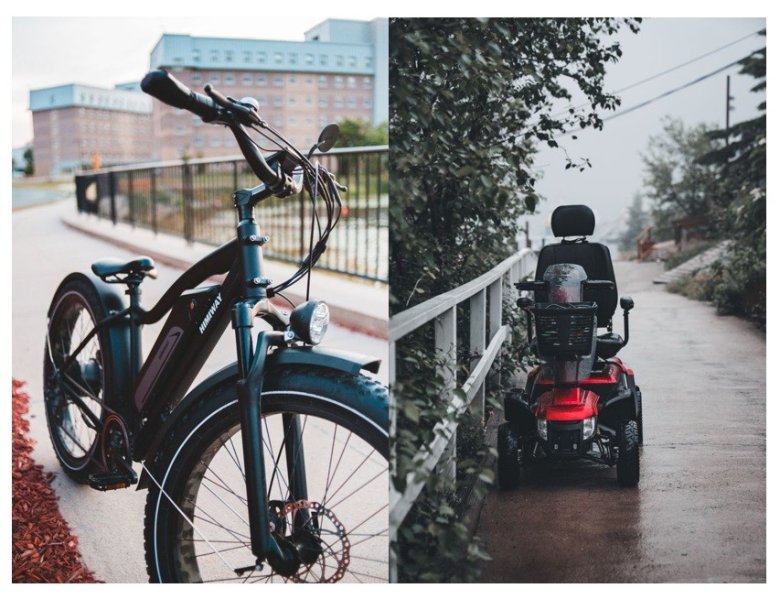
The Association recognises that e-bikes/scooters, mobility scooters and even electronic cigarettes ('vapes') are becoming more and more commonplace and can even offer convenience when heading out and about. However, many of these products are powered by rechargeable lithium-ion batteries.
Residents may have heard more about this topic in light of the recent fire disaster on Glasgow City Centre's Union Street, which proved that the effects of fires involving lithium-ion products can be rapid, devastating and much tougher to tackle. As a social landlord with strong Health and Safety obligations, we must ensure that the presence, storage or charging of such products does not lower the effectiveness of our existing fire safety measures already in place.
The Association recently undertook a significant review of its Fire Safety Policy, and has adopted the following stance with regards the storage and charging of such items within the housing stock:
- In line with Scottish Fire and Rescue Service guidance, the Association must emphasise that e-bikes/e-scooters/mobility scooters should not be stored or charged against building walls, near doors, windows, bin stores, gas meters, or any combustible materials in backcourts. These items may not be stored in any internal communal areas.
- Charging of lithium-ion batteries in backcourts or communal external areas is not permitted. Residents should also refrain from disposing of electronic cigarettes or lithium-ion batteries in communal bins and bin stores.
- Storage may be allowed only in designated, well-separated backcourt areas. Even in these cases, a backcourt inspection by the Association would be required to determine suitability.
- The Association has a preference for the storage of these items within individual homes; however, residents are strongly advised not to charge such items overnight, while sleeping, or when the dwelling is unoccupied.
Additional Safety Guidance For E-Devices
In addition to our stance on the storage and charging of e-devices, the following advice is also useful.
Buying your e-devices from reputable suppliers is always recommended, and registering it with the manufacturer will mean you can be contacted should there be any product recalls or faults to be communicated.
Avoid buying cheap or unbranded chargers or batteries, and do not adapt or modify the device.
After checking the battery and charger for damage, charge the device in a safe, designated place that won't hinder your exit should you need to escape in an emergency. Make sure to charge in a room where there is a working smoke alarm.
Always ensure the battery has had time to cool before charging, never cover the charger, and always plug the charger directly into a wall socket (do not use extension leads).
Fully unplug the charger after use.
And, crucially, never charge the device when you are asleep or not at home.
Stop using the battery and call for help if your battery shows signs of:
- Excessive heat
- Bulging, swelling, leaks or cracking
- Hissing sounds or smoke
If you are a tenant of the Association and you suspect any of your smoke or heat alarms are not working properly or that the electrics in your home are unsafe, please contact us without delay on 0141 285 7910 or email administration@yorkhillha.org.
If you feel you'd like advice on how to live more safely in your home, you can also look into a free Fire Home Safety Visit from the Scottish Fire and Rescue Service at firescotland.gov.uk/contact-us/home-fire-safety-visits/
Finally, if a fire does break out in your flat - get out, stay out and dial 999.
If you reside at 46 Overnewton Street, 58-60 Lymburn Street or 1265 Argyle Street, please ensure you are familiar with your site's fire evacuation plan for specific advice in the event of a fire. If you require another copy, please contact our office.